11.28.2015

The BEST best strength training exercise

If you had to pick ONE exercise as a cover-all  strengthening exercise for athletes, what would it be? What if you didn't have time to train more than one "big" lift but wanted to get some serious work in? Or, to say it with a more positive spin, what is one exercise that everyone should regularly include in their routine?

Most big-name (well, far more well-known that I) strength coaches will say squats (Mike Robertson and others), dead lifts (trap bar DL ala Cressey), or power cleans. These are all great exercises that I do and prescribe often, and there's plenty of rationale for choosing them as tops.

But I think there's one even better.


Better for strength and power...
Better for stability...
Better for carryover to functional outside-of-the-gym performance...
Better for safety...

And you're probably not doing it.
Drum roll...

The exercise is split squats! They seriously deliver the good.

Conditioning

They are awfully difficult and tiring. By the time you can split squat 6 to 10 reps one each leg, with your body weight on the barbell (or holding dumbbells), you're talking 12 to 20 reps of intense total body strength, balance, and stability effort. One feels like an eternity.

Strength and Size with less risk

Split squats are an exercise that allows you to load up some serious poundage, which is needed for building strength and size. While step-ups and -pure- single leg balancing work (aka single leg box squats, bowler squats, etc) are often worthwhile, they do not allow you to handle heavy loads. But split squats allow sufficient loading to strap some mass to the thighs and hips.
On the other hand, split squats demand less absolute load than conventional squats or deadlifts, thus saving some of the extreme compressive loads on the spine and knees. Along those lines, since proper form in split squats allows for a more upright torso, they demand much less front-to-back shear on the spine as compared to conventional squats and deads.

Also in terms of safety, split squats just don't hold the same ego factor as other traditional strength training movements. You won't see internet heroes bragging about how much they can split squat, and you won't see young men loading up more than they can handle simply for showmanship in the weight room.


Balance and stability in three planes


I stated above that split squats place less sagittal plane stress on the spine. That's good, since plenty of other resistance exercises do and we often have too much of that to begin with. But split squats are unique in that they demand a lot of stability in the other two planes of motion.


Split squats make extreme demands on total body balance and stability. Power cleans, squats and deads are performed on two legs and occur primarily in the sagittal (front to back) plane of motion. But most athletic and everyday life endeavors take place while a person is NOT perfectly squared up on two legs or has one leg on the ground (as in running and hurdle type leaps and bounds).  The forces of everyday life occur across all three planes of motion (including rotational and side-to-side).

Even well trained athletes struggle with split squats when they begin. The evidence of strength, balance, and stability demands shows up as they lose their balance, their torso twists, and hips sway to the side. I hope it goes without saying, that one should start light and progress slowly as they become capable of maintaining form and not spilling over!

How to split squat


Most people should begin with holding a relatively light resistance such as a 5 to 30- pound medicine ball, kettlebell, or dumbbell, in front of their chest. Place a bench or box approximately two or three feet behind you and drape the top of one foot over it. Now, with 80 to 90% of your body weight on the front leg, and the back leg being used for balance, squat down by bending the lead knee and hip. The torso should not drift toward the back foot. But you also don't want the lead knee going out over in front of the lead foot. Also, pushing too hard with the back/balance foot will sooner or later cause knee irritation. Keep the load on the front heel.

Struggle, master the form, up the resistance. Using a barbell on the shoulder rather than resistance front loaded at the chest creates even more challenge to the core and balance. I usually recommend one warm up then three "work" sets of 6 to 10 reps on each leg. It's well worth it.

- - - - -

Thankfully, we're not often limited to one exercise. A typical workout consists of a handful of exercises within a larger framework that is tailored to a specific individual and their goals.

...But what if we had to choose just one workout, one resistance training protocol that was the perfect go-to for the far majority of athletes, when life is busy and you want to cover all your bases well.

The Best Damn Workout, Period.

Coming next...


11.21.2015

fast unlike speed

A young man who trains here is a serious athlete. He has delivered consistent effort. He's learning a lot and seeing great progress. The additional size and strength is making him a game-changer on the soccer field.

Image result for fasting

Is this a time to be screwing around with an ancient spiritual exercise such as fasting? Not eating or sleeping well is a great combination for losing your hard-earned gainz. Why bother?

This young man is not trying to lose weight. In fact, that's the last thing that he needs. He's altogether unaware of the typical deceptive and false notions of shedding toxins. Yet his body will be drained when it should be recovering, and frailty is the last thing he needs to gain over a weekend. The unconscious stress and change in routine will increase his chances of getting sick. At best he will be hangry and slumped in prayerful postures. One cannot be optimally mobile and stable with a kyphotic spine like a willow reed flexed by the the wind.


I know well the shallow legalism of fasting, how to spot and mock hypocrisy. But Jesus himself addressed that a few thousand years ago, and it was covered in the book of Isaiah a few hundred years before that.


While fasting does tend to foster resiliency, self discipline and gratitude, these are not the goal. It's not to show holiness or to get anything. Fasting is not a test of self inflicted suffering. Fasting is a paradox, an upside down practice that is never easy. It cannot be formulated and sold in convenient packages. There's never a good time for it (unless you have ulterior motives like prosperity, temporary weight loss or to show off how holy you are).


"The devil doesn't appear in red face and horns. He comes to you disguised as everything you thought you wanted."


Fasting is supposed to be a time to tangibly put away your pride, to intentionally sacrifice some comfort or advantage in order to intimately feel what it means to go without. A time of fasting creates space for giving to others and having communion with God.

The outcome may be favorable, spiritually. But you will never see a call for fasting in the context of sports performance, where the blinders have us focused on training and nutrition. Fasting may make a high level athlete a bit weaker and slower. It's likely to make him or her forget about the competition and keep all idols, including the physical self, at bay. Fasting helps a person to see all of the world from a new angle.

I was going to claim that fasting provides no edge over the competition. But truly, who is to say? 
May that young man's light rise in the darkness...

- - - -


Is this time of fasting a day for a man to put away his pride? Is it for bowing his head like a piece of grass, and to spread ashes and cloth made from hair for his bed? Will you call this time without eating a day that pleases the Lord?


Is this not a time to take off the chains of sin, and to take the heavy load of sin off the neck? Is it not a time to let those who suffer under a sinful power go free, and to break every load from their neck? Is it not a time to share your food with the hungry, and bring the poor man into your house who has no home of his own? Is it not a time to give clothes to the person you see who has no clothes, and a time not to hide yourself from your own family?


Then your light will break out like the early morning...If you take the weight of sin away, and stop putting the blame on others and stop speaking sinful things, 10 and if you give what you have to the hungry, and fill the needs of those who suffer, then your light will rise in the darkness, and your darkness will be like the brightest time of day.  The Lord will always lead you. He will meet the needs of your soul in the dry times and give strength to your body.

11.07.2015

You Won't Believe What He Did To Protect His Growth Plates


Sorry for the social media click-bait type headline. But I'd like to put the issue of kids and weighty training to rest.

Image result for growth platesThe conventional thought for training exercising kids less than 14 (or so) years of age is that you provide them with structured callisthenic type bodyweight exercises, variations on running, and fun activities like obstacle courses.

I definitely see the value in keeping it light and fun for this age group. Some of the best "training" for children takes place while they ride a bike and play games of their own creation like wifflebase football in the backyard. Who am I to deny a good obstacle course?

But for the child who loves competition and signs up for related strength training and conditioning, there's on thing missing.

Resistance. "Weights."

Why are we not giving such kids the opportunity to handle some loading while there is guidance and oversight? What kid has not walked into a weight room, stopped at the dumbbell or kettlebell rack, and attempted to lift each item 2 inches from where it sits? Children are curious and WILL test themselves.

"Thirty five pounds? So -THIS- is what 35 lbs feels like."

The kids see their sports heroes lifting weights and talking about lifting weights. They hear a lot about growing up and getting strong. The kids (and their parents) who sign up for training are not average elementary physical education students. The children want to be there, present in a gym environment, and they WANT to lift the weights.

If you're wondering about injuries, you may first and foremost want to consider that "injury risk" is known as "being a kid."  Relative to nearly anything that doesn't involve sitting at a desk or couch, resistance exercise is safe. Take my word for it or you can read the hundred page statements by the American College of Sports Medicine and the National Strength and Conditioning Association.

1. The youth injury rate for supervised resistance exercise is far less than that of traditional sports.

2. Kids are far more prone to accidental drops, hits, and horseplay (inside and outside of the gym) than to muscle strains and joint sprains typically associated with heavy weightlifting.

3. A child's "training readiness" has far less to do with their chronological age and more to do with whether or not they WANT to be there and their ability to follow basic instruction.


4. The idea of injuring growth plates from weight training is an outdated and fairly absurd. Running, jumping, throwing, falling off a chair, and being hit by a ball all provide far more impact forces on their joints and growth plates.


5. Children are suffering from sports-related overuse injuries at an alarming rate. Why would we not encourage them to actively engage in activities (like resistance training) that do not reproduce the repetitive strain associated with any one sport, but provide a stimulus that makes them more resilient to those repetitive demands?

Resistance training is not "okay" for kids. It's GOOD for them. And it's relatively safer than the playing Tag and obstacle courses that conventional wisdom recommends.

Please hear me out. We're not talking about slapping plates on barbells or other intimidating machinery. Think of progressions (making the movement easier or more difficult depending on the status of the child) of push-ups, chin-ups, hip hinge deadlifts and step ups while holding resistance. Think of giving them an idea of what resistance training looks like rather than powerlifting, and educating them regarding proper form and exercise progressions. For those who are still skeptical, here are a few specific examples of resistance training exercises that can be productive and fun learning opportunities.


Can they hold 10 to 20% of their bodyweight in front of the chest and perform a quality squat pattern with heels on the floor, spine neutral, and good control at the knee?

Can they perform a fair hip hinge pattern to lift 30 to 50% of their bodyweight off the ground while keeping their heels on the floor and spine neutral?

Can they carry 25 to 50% of their body weight for 40 yards?
Can they perform a few chin-ups or 30 second controlled hang?

Can they perform various jumps and hops and produce a controlled landing? While holding a light medicine ball?


11.01.2015

The Machine

A long time ago, a man gave me a machine. I didn't appreciate the gift at the time, but the thing was an amazing piece of work. The system of interlocking pulleys, levers, and hinges is the best thing that I've ever been given.

It took quite a while to learn how to operate the machine and what to do with it. Thankfully I received a lot of assistance to get the thing started. The machine was light and jerky. It would go like mad and crash hard. But it was too weak, soft and slow to suffer much damage.

Then the machine became less frantic. It operated in constant motion until being forced to settle and reboot. The machine was pliable, elastic, and still quite limited in the ability to effect its environment. But then it experienced a sudden level up, becoming strong and fast and adaptable. The machine was springy and respected few limits in itself and surroundings.

With this longer duration of use and increased potential for drive, greater force and speed, came more potential for strain on the components. Recovery and repair was usually quick and seamless. When given insufficient manner or time for proper repair, the machine quickly adjusted to operate around the damage.

The machine had an amazing system of resiliency and redundancy. If one component suffered trauma or began to fail under stress, the workload was shifted to other components. Where one piece was locked or weakened, another piece grew more mobile or stronger. The machine became even more powerful but with less degrees of freedom.

At present, the machine operates in these altered pathways, until one day those pathways also begin to suffer strain. Interlocking components will begin to fray or wear thin. The Machine will become stiff and slow. In time, gravity overwhelms the stacked segments. Those that angle front-ways will begin to fall forward and those that lean away will buckle backward.

The Machine will eventually accumulate rust, with gnashing together of materials that were not designed to withstand friction and compression. Now days, mechanics attempt to tweak and revise the patterns in which the machine operates. This can provide additional miles and hours of operation, but everything has it's limits. The machine may undergo a process of replacing dysfunctional segments. The new segments move better, but they never work as well as the original pieces. They too eventually wear down, lasting less than a fourth of the duration of the original components.

The Machines CPU usually declines at a slower rate than the mechanical pieces. In time, the machine will be less concerned with speed and strength or changing its environment and more with maintaining independent function. The machine usually falls into more of an advisory role.

It turns out that the CPU and the mechanical pieces rely on each other far more than previously thought. As one wanes, so goes the other. It's always sad to see or experience the decline and eventual cessation of function. But name any other machine with the capacity to last 70 to 100 years.


        ...for dust you are, and to dust you shall return.

10.28.2015

It's Okay To Bench!

Well, sometimes...


Image result for olympic bench pressWith the advent of smart, sport specific baseball training and conditioning, some athletes and their parents have taken the message of Eric Cressey et. al out of context.

The bench press has plenty of potential for putting the shoulder at risk. It is also a technically simple and effective way to build upper body size and strength.

Is it okay for baseball players to bench press? I think Cressey himself would tell you that it depends. The best we can do is answer the question in the consideration of a given athlete.
- - - - -

Is the baseball player going to bench press two or three times per week? Every Monday, Wednesday, and Friday is National Bench Press Holiday for all the gym bros who love them some bench. This is unnecessary and may lead to development of imbalance and overload to the shoulders.

Is the athlete already bench pressing three hundred pounds for reps? He is already in a place called "strong enough" and as a baseball player, should invest his time elsewhere.

Has the baseball players put in many seasons as a pitcher and developed adaptive changes to the shoulder (like anterior shoulder joint laxity and torsion of the humeral shaft)? Bench pressing is not best for this athlete.

Is the athlete already being paid millions of dollars to pitch? In this case the potential benefits of bench pressing are not worth the risk of injury.

- - - - -

Is the athlete generally free of shoulder issues and sporadically using the bench press as a part of an overall strength training program?

Is the baseball player in desperate need of gaining five or thirty pounds in order to improve overall performance?

Is the athlete going to keep things in perspective, NOT hyperextending his back and using a super wide grip and massive hip drive in order to move 15% more weight on the bar?

- - - - -

Most young baseball position players fall into the latter group of scenarios listed here. They have much to benefit from using the bench press as part of an overall training program. Many collegiate and higher level pitchers will fall into the former group and should likely cool it on the bench.

10.25.2015

A few hours with Mike Robertson


Yesterday I had the privilege of getting to know Mike Robertson. We spoke on various topics of performance training and rehabilitation as I observed him apply his process of athlete assessments.


He had me at the "PR Bell."


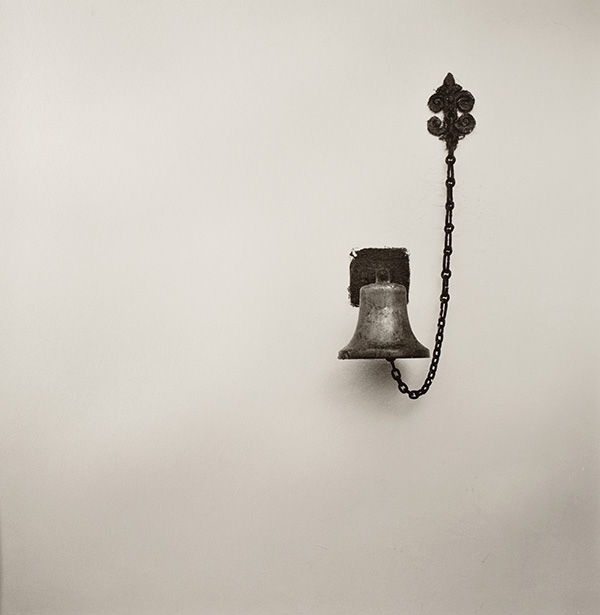
Mounted on the wall was a brass bell beneath a small plaque reading "PR Bell."


Mike Robertson is one of the top trainers in the US working in one of the top 10 gyms in the US. He is kind and his methods are simple and effective. His communication skills are world-class. His training facility has everything you need and no more. I love it - the number of exercise and entertainment contraptions and machinery that I did not see at his modest sized gym.


It's no secret that Mike is a huge advocate of the methods created by the Postural Restoration Institute. I've not pursued formal training in PRI, and I'm still not sure that I need to. We discussed how his skill set is overlapping in some areas and complimentary in other areas as compared to more traditional rehabilitation providers.


But Mike is obviously doing something VERY right. Chief among the many areas he excels is in helping the athlete to understand how the low intensity, unexciting corrective type work relates to the more glamorous hardcore training and performance qualities that everyone seeks. And then...imagine this! ...He provides a method and facility to do both in a comprehensive program.


My-my.


We got this!


10.13.2015

Zombies hate physical therapy

A case study:

The patient is a 47 year-old female whose chief complaint is right leg weakness and instability which adversely effects her ability to walk. Relevant past medical history includes lumbar disc herniation, fibromyalgia, and being deceased as of October 31 2014. She reports an abrupt onset of symptoms at that time, and describes the mechanism of injury as grabbing, biting and scraping of the right lower leg. She reports that her symptoms have gradually worsened as the leg continues to decay.

The patient has not underwent a recent medical exam or diagnostic imaging.
 
The patient rates her pain as 0/10.

Significant trauma of the right lower extremity is observable, with weepy goo pockets of mushflesh. The common peroneal nerve is exposed over a gnawed fibular head. The right Achilles tendon is absent and the plantar fascia is not tender to palpation. Pedal pulse is 0 beats/min. Patient is unable to detect 10 g monofilament light touch. The patient ambulates with right foot flat at initial contact phase of gait, with lateral trunk lean to the right and right hip adduction during weight acceptance, and there is no supinatory propulsion during late stance phase. Functional limitation include right leg weakness and instability which creates difficulty with activities of daily unliving. The patient goals include increased strength and stability of the right leg to enable return to stalking humans without complication.

Applicable ICD-10 diagnosis codes include:

M36X221 - bit by a zombie
F329 - zombie
JKLMNOP34 - ataxic confabulations
6789876 - abnormality of gait
S92.1 - stanky leg

Todays treatment included fitting patient with rigid rocker bottom shoes and Arizona Brace to provide external stability to the foot and ankle. Following this, the patient demonstrated improved speed of walking including acceleration and change of direction with minimal energy leak.

The agreed upon goals and treatment plan were discussed with the patient. She will attend physical therapy for two to three visits over the next two weeks to allow for sufficient  help l;dka#$%%d_!@*khhhhhjkljkl